

(Minghui.org) By reflecting on past experiences, a person can avoid mistakes and do better. Nations also need to learn from history.
But learning from past lessons is easier said than done.
Nazi Concentration Camps
Most people are aware of the genocide of the Jews during World War II. The Nazis established numerous concentration camps, the largest of which was Auschwitz, where 1.1 million people were murdered. The second largest camp in Poland was Majdanek, where 360,000 people lost their lives.
Located near the city of Lublin, Majdanek was built in 1941 after the Nazis occupied Poland. Approximately 500,000 prisoners from 26 countries were detained there, where they were made to do hard labor and were systematically murdered. The victims include Jews, members of the Polish underground resistance, and Soviet prisoners of war.
After the region was liberated in 1944, some of the gas chambers, crematoria, ossuaries, and barracks were kept and turned into a national museum. Around the globe, hundreds of Holocaust museum and memorial sites were established to document this tragic history, honor the victims, and educate future generations.
At the Treblinka extermination camp memorial site where 870,000 people were murdered, numerous plaques bear the message, “Never again,” in several languages. Similarly, an inscription on the frieze of the Mausoleum Dome at Majdanek states, “Let our fate be a warning to you.”
Cultural Revolution Museum: A Broken Dream
Not all lessons were learned, though. After taking power in 1949, the Chinese Communist Party (CCP) brought class struggle, hatred, and lies to China. It wiped out millennia of traditional values and replaced them with ruthless repression.
There is a long list of political campaigns in China that took place since 1949, such as the Land Reform Movement (1950 – 1953, which targeted landlords), the Three-anti and Five-anti Campaigns (1951 – 1952, which targeted business owners), the Anti-Rightist Campaign (1957 – 1959, which targeted intellectuals), and the Cultural Revolution (1966 – 1976).
The Cultural Revolution alone caused unprecedented havoc throughout society and sought to obliterate Chinese civilization. Countless historic and cultural heritage sites were destroyed, Buddhist and Taoist temples were ruined, and intellectuals were forced to make public statements against their will. Even family members were instigated to attack one another. Thousands of years of civilization were destroyed in just a few years.
Afterwards, many people reflected on what happened. To ease public anger, the CCP acknowledged that the Cultural Revolution was a mistake. As usual, however, it attributed the fault to key officials, namely, the “Gang of Four.” The Party whitewashed itself, as it has always done.
Ba Jin, a Chinese scholar and writer, suffered tremendously during the Cultural Revolution and his wife died a painful death from untreated cancer. He reflected on that period of time and wrote sui xiang lu (Random Thoughts) between 1978 and 1986, which was published in 1987.
In the book, Ba proposed that a Cultural Revolution Museum be built, to review what went wrong and prevent a similar disaster from happening again. But his idea was never carried out.
Continued Nightmare
How many people have died due to the CCP’s brutality? Scholars estimate about 40 million during the Great Famine (1959 – 1961) alone. About 80 million people lost their lives because of the CCP during peace time, which is close to, or exceeds the total deaths from the two World Wars combined.
But the CCP is unwilling to establish a museum for this—this is not surprising, because these deaths were caused by the regime. Would Adolf Hitler build a Holocaust Museum? Probably not.
So the tragedies in China continue. Thirteen years after the Chinese Cultural Revolution ended, the Tiananmen Square Massacre occurred on June 4, 1989. Unlike previous political campaigns, however, the CCP continues to deny the brutality that took place on Tiananmen Square.
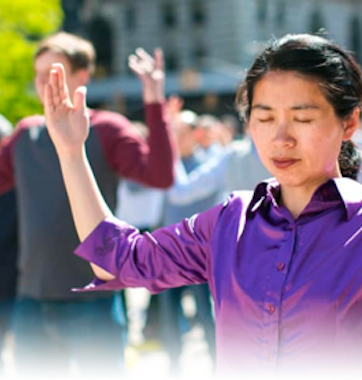
Another catastrophe is the persecution of Falun Gong, a meditation system based on five sets of exercises and the principles of Truthfulness-Compassion-Forbearance. The CCP initially praised the practice for its physical and mental benefits. However, once the number of Falun Gong practitioners exceeded CCP members, former CCP leader Jiang Zemin viewed it as a threat and launched a nationwide suppression in July 1999.
The majority of these 100 million practitioners have suffered severe discrimination for their belief over the past 26 years. A large number have been harassed, arrested, detained, imprisoned, and tortured. Many experienced forced labor, psychiatric abuse, and even became victims of large-scale forced organ harvesting—an unprecedented state-run terror.
Compared to the other political campaigns launched by the CCP, the persecution of Falun Gong may not have the largest number of victims, but the nature of the persecution is most vicious—it pushes people away from their conscience and sides with evil, thus undermining the foundation of humanity.
“While attacking truthfulness, compassion, and tolerance, Jiang and the CCP allowed falsehood, evil, violence, poison, wickedness, and corruption to propagate. What followed was a widespread moral decline in the land of China, affecting everyone,” states the Nine Commentaries on the Communist Party, published in 2004.
Since the publication of this book, over 450 million Chinese have now renounced their membership in the CCP organizations, which also includes its two junior affiliates: the Communist Youth League and the Young Pioneers.
Outside China, however, many people still have not recognized the CCP’s ruthless and malevolent nature, while the regime ramps up its efforts to push communist ideology and propaganda globally.
History often repeats itself. After millions of people died during the Ukrainian famine between 1932 and 1933, Walter Duranty, Moscow bureau chief for The New York Times (1922–1936), denied this, openly praised Joseph Stalin, and attacked Gareth Jones, a British journalist who reported the facts. Duranty even won a Pulitzer Prize for his reporting. The New York Times did not issue an apology for this misrepresentation until 2018.
As for the Holocaust, when Polish diplomat Jan Karski told U.S. President Franklin Roosevelt and Supreme Court Justice Felix Frankfurter in July 1943 about his firsthand account of the Holocaust against Polish Jews, they dismissed it.
“I am unable to believe you,” said Frankfurter, who was Jewish.
“Felix, you cannot tell this man to his face that he is lying,” the Polish ambassador said. “The authority of my government is behind him.”
“Mr. Ambassador, I did not say that this young man is lying. I said that I am unable to believe him,” replied the justice. “There is a difference.”
As countless pieces of evidence mount about the CCP’s persecution of Falun Gong, including the state-sanctioned forced organ harvesting, many international news media and government officials have remained silent.
Will we see more signs with the words, “Never Again” or “Let our fate be a warning to you” in the future?
Only time will tell.
Copyright © 1999-2025 Minghui.org. All rights reserved.
Category: Perspectives